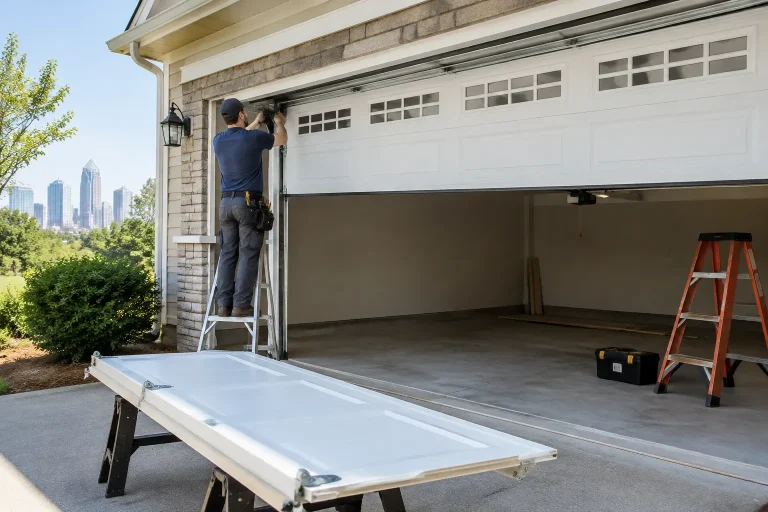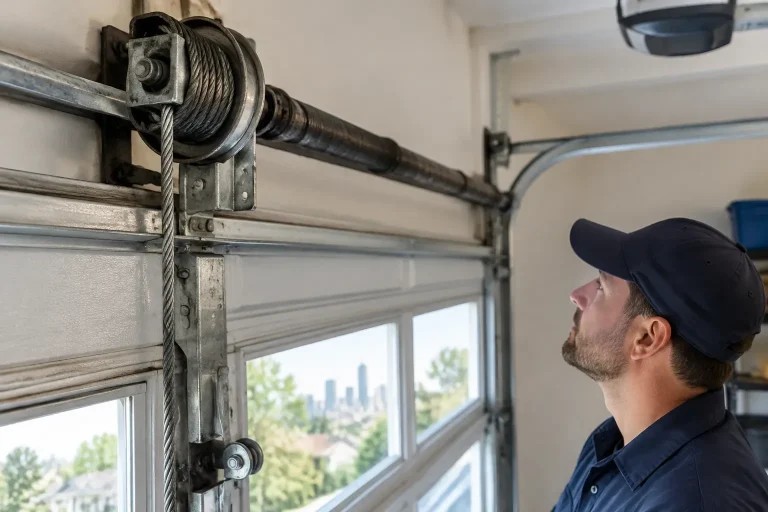


A garage door that suddenly gets stuck halfway can interrupt your routine and leave your garage partially exposed. The problem may involve damaged rollers, track obstructions, worn lifting components, opener malfunctions, or excessive resistance during movement. Rather than repeatedly pressing the remote or forcing the door into position, stop operating it and look for obvious problems from a safe distance.
Imagine getting ready to leave your Charlotte home when the garage door rises several feet, makes an unfamiliar grinding sound, and stops. You might immediately suspect the opener motor, but an inspection could reveal a roller binding inside the track or a spring system that is no longer counterbalancing the door properly. The visible symptom is the same, yet the required repairs are very different.
The safest response is to avoid standing beneath the suspended door, keep children and pets away, and check for visible obstructions without touching moving components. Do not pull the emergency release while the door is partially open and its condition is unknown.
Understanding whether the door stops during opening or closing can help narrow down the possible causes. If the problem continues, explore professional garage door repair services in Charlotte to identify the underlying issue and determine the appropriate repair.
Why Does a Garage Door Get Stuck Halfway While Opening?
When a garage door stops midway through opening, the problem often involves mechanical resistance, an issue with the counterbalance system, or an opener that cannot complete its normal travel cycle. The exact stopping point can provide useful clues, but it does not confirm which component is responsible.
For example, a door that rises smoothly for several feet before suddenly stopping may encounter resistance where the rollers transition into the curved tracks. A door that barely lifts from the floor could have a different problem involving the springs, cables, or opener.
Homeowners should pay attention to unusual sounds, uneven movement, and whether the door stops at approximately the same height. These observations can help a technician identify the cause without repeatedly operating a potentially damaged system.
If your door consistently stops during opening, explore professional garage door repair solutions in Charlotte to determine which components need attention.
Why Does a Garage Door Stop Halfway While Closing?
A garage door that stops or reverses while closing may be responding to an obstruction, excessive mechanical resistance, or a problem involving the opener’s safety system. Unlike opening problems, closing interruptions can also involve photo-eye sensors designed to detect obstructions near the garage door opening.
Suppose your garage door begins closing normally but reverses before reaching the floor. You might suspect that the sensors need adjustment. However, the actual problem could be a roller binding inside the track or another component creating resistance as the door moves downward.
Before requesting repairs, homeowners can check for visible objects blocking the doorway and gently clean accessible photo-eye sensor lenses. Never disconnect, bypass, or interfere with the safety sensors to force the door closed.
If the closing problem continues after these basic checks, review professional garage door opener repair and related services to understand how opener and mechanical problems can be evaluated.
Can Damaged Garage Door Rollers Cause the Door to Stop?
Yes. Garage door rollers guide the door along its tracks, allowing the panels to move smoothly between the closed and open positions. When rollers become worn, damaged, displaced, or unable to rotate properly, they may create enough resistance to interrupt normal movement.
A damaged roller can produce scraping, grinding, or jerky movement before the door stops. In some situations, the opener may detect increased resistance and stop operating to protect the system.
The condition of the surrounding tracks and hinges should also be examined. Replacing a roller without checking for track distortion or damaged mounting hardware may leave the underlying problem unresolved.
If unusual roller movement appears to be contributing to the issue, arrange a professional garage door repair inspection in Charlotte rather than attempting to reposition rollers while the door is suspended.
How Can Bent or Misaligned Tracks Interrupt Garage Door Movement?
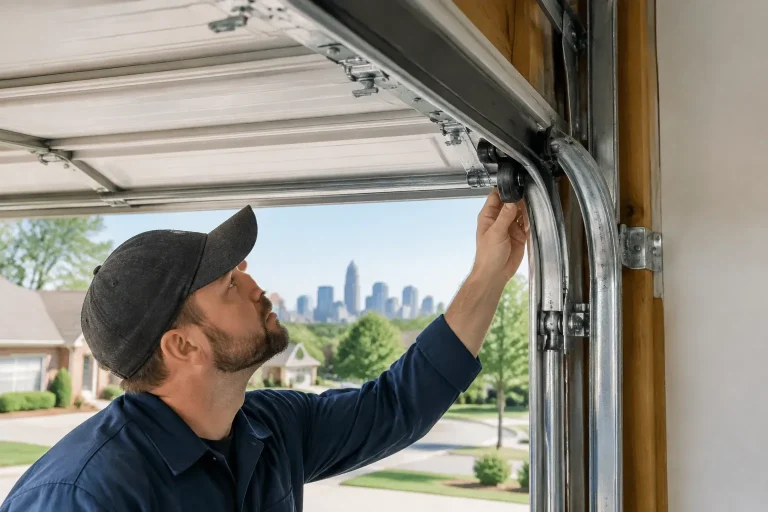
Garage door tracks guide the rollers along a specific travel path. When a track becomes bent, twisted, loose, or incorrectly positioned, the rollers may encounter resistance that prevents the door from opening or closing completely.
A track-related problem may become noticeable when the door reaches a particular height. The homeowner might hear scraping, notice one side moving differently, or see that the panels are no longer traveling evenly.
However, stopping at the same position does not automatically prove that the track is damaged. Roller wear, panel interference, opener settings, and other mechanical conditions can produce similar symptoms.
Avoid loosening track brackets or attempting major alignment adjustments yourself. A partially open garage door can be unstable, especially when its supporting hardware is damaged.
For suspected track problems, explore professional garage door repair services for damaged tracks and related components to identify the appropriate repair.
Could a Broken Garage Door Spring Leave the Door Stuck Halfway?
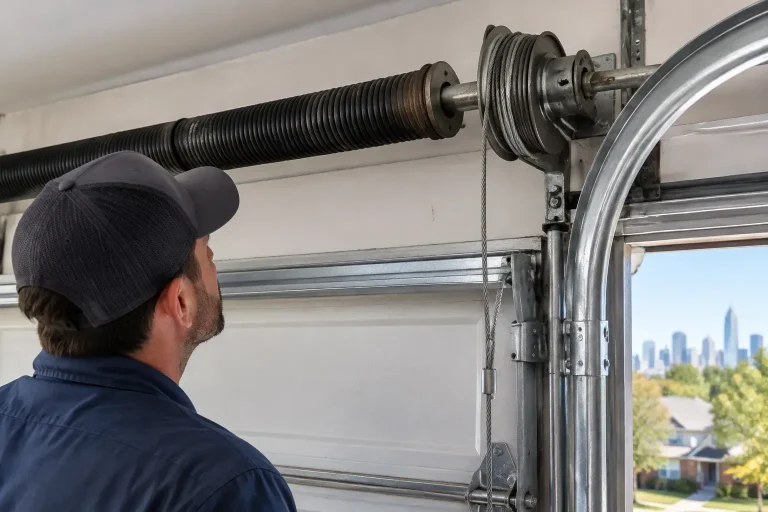
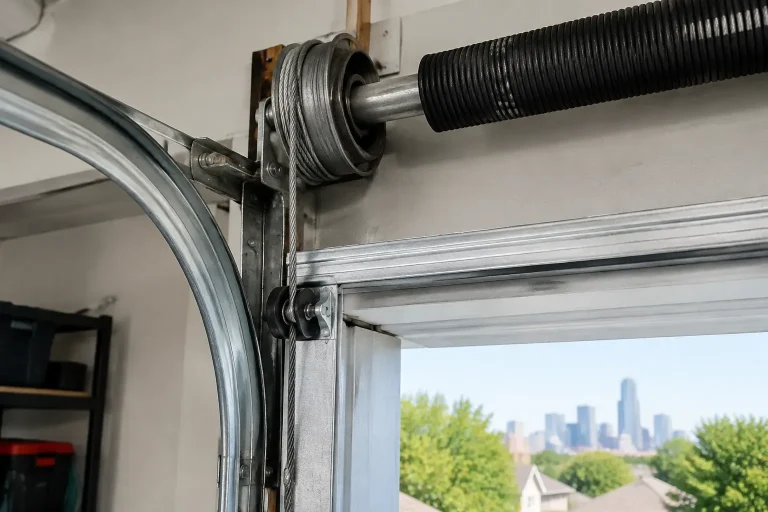
A broken or malfunctioning spring can prevent a garage door from moving normally because the spring system counterbalances much of the door’s weight. Without proper counterbalance, the opener may struggle to lift the door, stop unexpectedly, or fail to move it at all.
Some homeowners notice a loud snapping sound before discovering that their garage door will no longer open completely. Others first notice unusually heavy movement or a door that appears uneven. These symptoms can suggest a lifting-system problem, but they do not confirm a broken spring without inspection.
Garage door springs and lifting cables can remain under substantial mechanical tension. Do not attempt to wind, unwind, reconnect, or adjust these components. Avoid pulling the emergency release when the door is suspended and the condition of the counterbalance system is unknown.
If a spring or cable problem is suspected, request a professional evaluation of your garage door’s lifting system before attempting further operation.
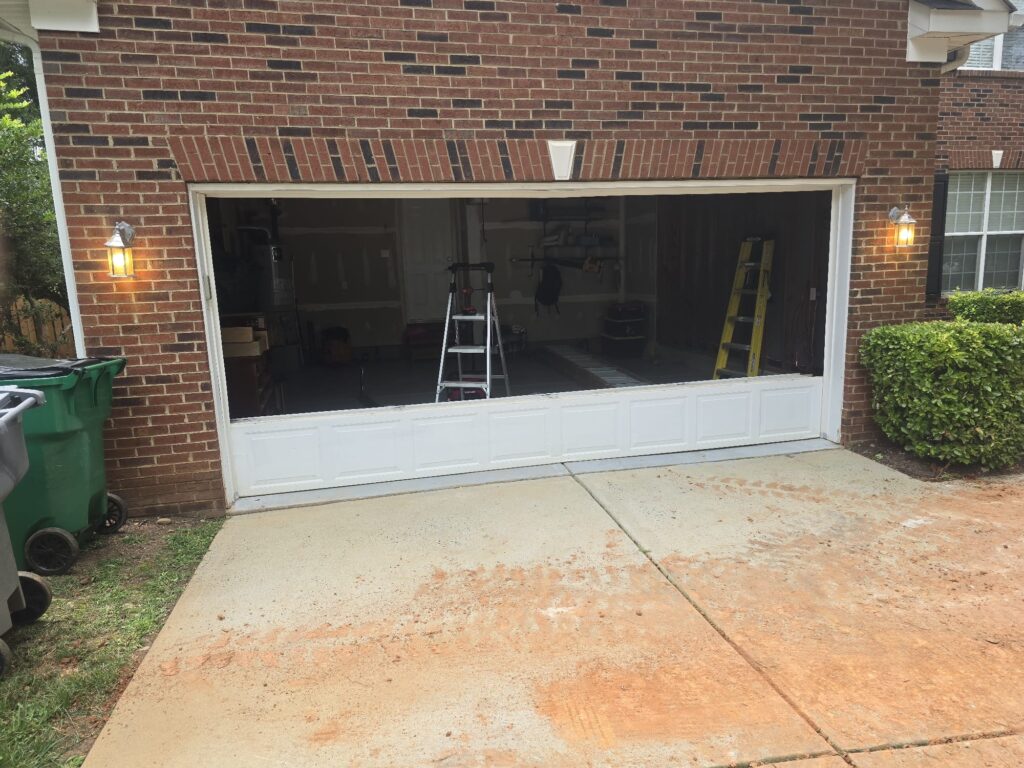
Can a Garage Door Opener Malfunction Cause the Door to Stop Midway?
Yes. A garage door opener may stop during operation because of worn drive components, motor problems, incorrect travel settings, or resistance that prevents the door from moving normally. However, an opener that stops halfway is not necessarily defective. The problem may originate in the garage door itself.
For instance, an opener might operate normally for several seconds before stopping and making a humming sound. A homeowner may assume the motor is failing, but a technician could discover that the door is binding along its track. Alternatively, the door may be mechanically sound while a worn opener component interrupts movement.
A proper inspection should distinguish between opener-related faults and mechanical problems before recommending replacement. Changing travel or force settings without checking the door can conceal an underlying issue.
If the opener repeatedly stops, struggles, or makes unfamiliar noises, explore professional garage door opener repair and troubleshooting services to determine which components require attention.
What Can Homeowners Safely Check When a Garage Door Stops Halfway?
When a garage door becomes stuck midway, a few basic observations can help identify possible problems without handling dangerous components. The priority is to avoid unnecessary movement and keep the area around the suspended door clear.
Start by observing the door from a safe position. Look for visible objects obstructing the tracks, unusual gaps between the panels, displaced rollers, or one side sitting higher than the other. Do not reach into the tracks or attempt to move damaged hardware.
You can also check whether the opener has electrical power and whether the remote responds. If the problem occurs during closing, inspect the area around the photo-eye sensors for obvious obstructions. Accessible sensor lenses can be gently cleaned without changing their wiring or mounting positions.
Useful observations to record include:
- Whether the door stops while opening or closing.
- The approximate height where movement stops.
- Any grinding, scraping, or unusual motor sounds.
- Whether the door reverses or remains stationary.
- Visible changes in alignment or hardware position.
These details can help a technician evaluate the system more efficiently. If the cause remains unclear, schedule a professional garage door inspection in Charlotte rather than repeatedly testing the door.
Why Does My Garage Door Keep Stopping at the Same Height?
A garage door that repeatedly stops at approximately the same height may be encountering resistance at a particular point along its travel path. Possible causes include a damaged roller, bent track, panel interference, or an opener setting that prevents the system from completing its intended movement.
The location of the interruption can help narrow the inspection. For example, a door that consistently stops near the curved portion of the track may have a roller or alignment problem. However, that same symptom can sometimes result from opener-related issues.
A technician may need to examine how the rollers travel, whether the tracks remain correctly positioned, and whether the opener is responding to excessive resistance. The stopping position alone cannot establish which component has failed.
Avoid repeatedly activating the opener to determine whether the door will eventually move past the problem area. If the door consistently stops at one position, request professional garage door repair in Charlotte to identify the cause.
Is It Safe to Manually Close a Garage Door That Is Stuck Halfway?
Manually closing a garage door stuck halfway can be dangerous, especially when the cause of the problem is unknown. The door may be unusually heavy, improperly balanced, off-track, or supported by damaged lifting components.
The emergency release mechanism disconnects the opener from the garage door, but it does not repair a broken spring, damaged cable, or track problem. If the counterbalance system is compromised, disconnecting the opener while the door is partially open could allow unexpected movement.
Do not stand beneath the suspended door, pull damaged cables, or attempt to force the panels downward. If the door appears crooked or a roller has left its track, keep people and pets away from the opening.
If your garage door cannot be safely opened or closed, arrange professional assistance for a stuck garage door rather than attempting to move it manually.
When Should You Stop Troubleshooting and Request Professional Repair?
Basic homeowner checks are useful when the problem involves an obvious obstruction or an accessible sensor lens. However, troubleshooting should stop when the door remains suspended, repeatedly stalls, moves unevenly, or shows signs of mechanical damage.
Grinding sounds, displaced rollers, visibly damaged tracks, loose-looking cables, or suspected spring failure are reasons to avoid further operation. These conditions may involve heavy components or hardware under substantial tension.
A professional inspection should evaluate the door and opener together. This helps distinguish between a mechanical obstruction, a lifting-system problem, and an opener malfunction before deciding which repair is appropriate.
If the problem continues after safe visual checks, explore complete garage door repair services in Charlotte to determine the next appropriate step.
How Can You Prevent Your Garage Door From Getting Stuck Halfway Again?
Preventing repeated garage door interruptions starts with identifying developing problems before they affect normal operation. Rollers, tracks, hinges, springs, cables, and opener components work together, so wear or damage in one area can create resistance elsewhere in the system.
Pay attention to changes in operating speed, unusual grinding or scraping sounds, uneven movement, and hesitation during opening or closing. These symptoms do not always indicate a serious failure, but they can help identify components that require inspection before the door becomes stuck.
Homeowners can keep accessible track areas free of debris, observe visible hardware for deterioration, and follow the manufacturer’s maintenance recommendations. Spring adjustments, cable repairs, and major track realignment should always be left to qualified professionals.
For preventive care, explore professional garage door maintenance services in Charlotte. If your door continues stopping unexpectedly, review complete garage door repair solutions or schedule a professional inspection to identify the cause before additional operation creates further damage.
Frequently Asked Questions
Why does my garage door open halfway and suddenly stop?
A garage door may stop halfway because of mechanical resistance, worn rollers, damaged tracks, spring problems, or opener-related faults. The stopping position can provide useful clues, but it does not confirm which component is responsible. If the door repeatedly stops at the same height, avoid forcing it to continue moving. A professional inspection can determine whether the issue involves the lifting system, opener, or another mechanical component. Explore garage door repair services in Charlotte to identify the appropriate repair.
Why does my garage door close halfway and then reverse?
A garage door that reverses during closing may be responding to an obstruction, excessive mechanical resistance, or an opener safety-system problem. Photo-eye sensors can also prevent normal closing if they are blocked, misaligned, or malfunctioning. Homeowners can safely check for visible obstructions and gently clean accessible sensor lenses. Never bypass the sensors to force the door closed. If the problem continues, review professional garage door opener repair services to determine whether the opener or mechanical system requires attention.
Can a broken garage door spring cause the door to get stuck halfway?
Yes. Garage door springs counterbalance much of the door’s weight, and a broken spring can prevent the opener from lifting it normally. The door may become unusually heavy, stop after moving a short distance, or fail to open altogether. However, similar symptoms can result from cable or opener problems. Do not disconnect the opener or attempt to lift the door manually when spring damage is suspected. Request a professional inspection of your garage door’s lifting system to determine the cause safely.
Why does my garage door stop at exactly the same height every time?
Repeated stopping at the same position may indicate resistance at a particular point along the door’s travel path. Possible causes include damaged rollers, bent tracks, panel interference, or incorrect opener travel settings. The stopping height helps guide troubleshooting but cannot confirm a specific failure. Avoid repeatedly activating the opener or increasing force settings to push past the problem. If the door consistently stops at one position, explore professional garage door repair options in Charlotte for a complete mechanical evaluation.
Can a garage door opener overheat and stop working halfway?
Some garage door openers have thermal protection that temporarily interrupts operation when the motor becomes too hot. However, overheating is only one possible explanation for an opener stopping midway. Mechanical resistance, worn drive components, electrical faults, or motor deterioration can produce similar symptoms. Allowing the motor to cool may restore temporary operation, but repeated interruptions should not be ignored. Explore professional garage door opener repair and diagnostic services if the problem continues.
Is it safe to pull the emergency release when my garage door is stuck halfway?
It can be dangerous. The emergency release disconnects the opener from the door, but it does not correct problems involving springs, cables, tracks, or door balance. If the counterbalance system is damaged, releasing the opener while the door is partially open could allow unexpected movement. Avoid standing beneath the door or attempting to force it closed. When the cause is unknown, schedule a professional garage door inspection before using the emergency release.
Why does my garage door sometimes work normally but get stuck at other times?
Intermittent problems may result from rollers that occasionally bind, inconsistent mechanical resistance, opener faults, or electrical issues. A door may operate normally during one cycle and stop unexpectedly during another, depending on the condition of its components. Record whether the issue happens during opening or closing and note any unusual sounds or movements. These observations can help identify the underlying cause. If the problem continues, request professional garage door repair in Charlotte rather than assuming the system is functioning correctly between incidents.
Can damaged garage door tracks cause the door to stop halfway?
Yes. Bent, twisted, or misaligned tracks can interfere with roller movement and prevent the door from completing its normal travel. Possible symptoms include scraping, jerky movement, uneven panel positioning, or stopping at a consistent height. However, these signs can also result from damaged rollers or other components. Major track adjustments should not be attempted while the door is suspended. Explore professional garage door repair solutions to determine whether track damage is contributing to the problem.
Can regular garage door maintenance prevent halfway stopping problems?
Regular maintenance can help identify developing issues involving rollers, tracks, hinges, and other mechanical components before they interfere with normal operation. However, maintenance cannot guarantee that a garage door will never malfunction. Homeowners can observe changes in movement, keep accessible areas clear, and arrange professional inspection when unusual symptoms develop. Explore professional garage door maintenance services in Charlotte to support dependable operation and identify potential repair needs.
When should I call a professional for a garage door stuck halfway in Charlotte?
Professional assistance is recommended when the door remains suspended, repeatedly stops, moves unevenly, produces grinding noises, or shows signs of damaged springs, cables, rollers, or tracks. A partially open door may be unstable, so avoid standing beneath it or attempting to force it into position. A technician can inspect both the opener and mechanical system to identify the cause. Schedule a professional garage door repair evaluation in Charlotte when the problem cannot be resolved through safe basic checks.
For help diagnosing a garage door that repeatedly stops halfway, contact Quick Fix Garage Door Service to schedule a professional repair inspection in Charlotte.