

Can a Garage Door Cable Be Repaired, or Does It Need Replacement?
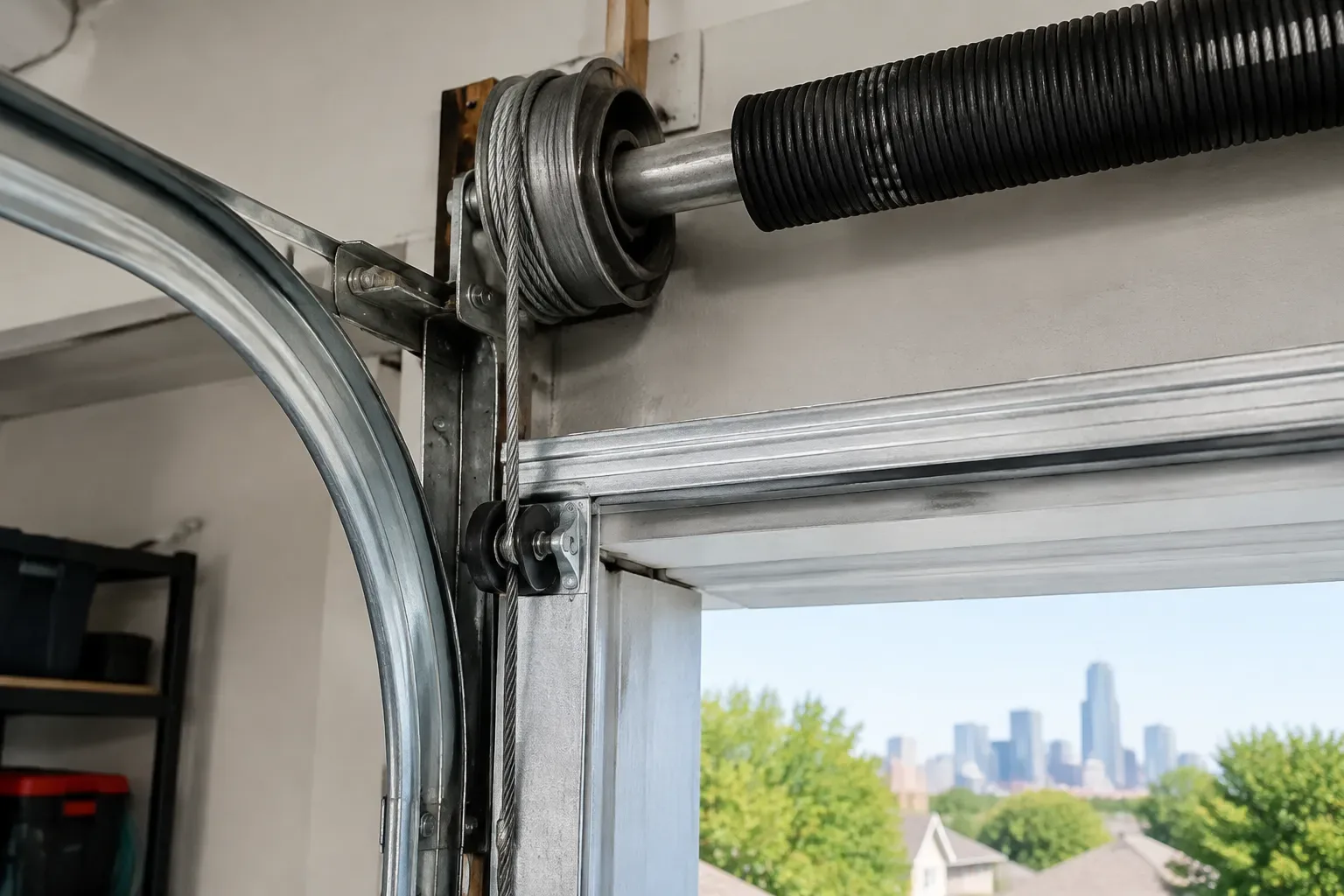
Most damaged garage door cables need replacement, not repair. A cable that is frayed, kinked, stretched, corroded, broken, or loose at an end fitting cannot be made reliably safe by tying, splicing, or taping it. A cable that has simply slipped off its drum may sometimes be reset, but only after the reason it came off is identified and corrected.
Because lift cables work alongside high-tension springs and support the door’s movement, a visible cable problem is a reason to stop using the door until it is assessed. QuickFix Garage Door Service – Charlotte NC provides residential and commercial garage door service in Charlotte and surrounding communities.
Quick Answer
Replace a garage door cable when its strands are damaged, its fittings are compromised, or the cable has lost its proper shape. Do not treat a damaged cable as a repairable item.
If an intact cable has come off the drum, the solution may involve correctly reinstalling it, but that is not the whole diagnosis. Door imbalance, a damaged drum, worn rollers, track alignment, spring tension, or a bottom bracket issue can all contribute. The cable should be reset only after the underlying fault is checked.
How can you tell if the cable is damaged or just off the drum?
Start with what you can safely observe from a distance. A broken or compromised lift cable may show loose strands, rust, kinks, flattening, a dangling end, or separation from its bottom fitting. The door may hang unevenly, stop partway, or sit higher on one side.
A cable off the drum can look slack or bunched near the top corner of the door. That observation does not prove the drum caused the issue. It may be the result of a door that moved out of level, a track obstruction, a roller problem, an incorrect spring adjustment, or another mechanical fault.
Which cable outcome applies to your door?
Replace a damaged cable
Fraying, corrosion, kinks, broken strands, stretching, or damaged end fittings call for a properly matched replacement cable. Splices and makeshift repairs are not a dependable solution.
Reset an intact cable off the drum
An undamaged cable may be repositioned when the system is secured and the source of the derailment is corrected. The drum, spring system, tracks, rollers, and door balance still need evaluation.
Repair a related component
Sometimes the cable is only the visible symptom. A worn roller, bent track, failing spring, damaged drum, or misaligned door may need service before the door can operate safely again.
Why is a frayed or snapped cable unsafe to use?
Lift cables transfer the door’s load through the spring-counterbalance system. When one cable fails, the door can become tilted, bind in the tracks, or become difficult to support. Continuing to use the opener can strain other parts or worsen the door’s alignment.
The automatic reversal feature on an opener is not a substitute for a sound cable system. It is designed to respond to obstruction conditions, not to correct a door that is mechanically unsupported or lifting unevenly. If the door is attached to the home, a cable failure can also leave a primary entry point difficult to secure or use.
What should a professional inspect along with the cable?
A replacement is only as good as the system it fits. Cable diameter, length, construction, end termination, drum type, routing, door weight, and lift configuration must match the existing setup. Similar-looking cables are not automatically interchangeable.
A complete assessment commonly includes:
- Both lift cables and their end fittings
- Cable drums and cable routing
- Springs and the door’s balance
- Bottom brackets, rollers, tracks, and mounting hardware
- Door alignment and smooth travel
- Opener operation after the mechanical system is functioning correctly
For a crooked or jammed door, a Charlotte garage door repair assessment can identify whether the cable is the primary failure or part of a wider mechanical problem.
Should both garage door cables be replaced at the same time?
Not always. The decision depends on the other cable’s condition, its age, whether the pair matches in specification, and the design of the door system. An intact cable should not automatically be replaced simply because the other one failed, but it should be carefully inspected.
Replacing only the visibly failed cable can be reasonable when the matching cable remains in good condition and the surrounding hardware checks out. If both cables show corrosion, wear, or mismatched characteristics, a technician may recommend addressing the pair so the lifting system is properly matched.
What should you do before a cable service visit?
Avoid troubleshooting inside the spring-and-drum area. Taking a few safe precautions helps prevent further damage and gives the technician useful information.
- Stop using the wall button, remote, and keypad if the cable is visibly damaged, loose, or off the drum.
- Keep people, pets, and vehicles away from the door, especially if it is crooked or partly open.
- Do not pull on the cable, remove a drum, loosen spring hardware, or try to lift a heavy door into place.
- Note what you observed, such as a loud snap, uneven travel, a cable hanging loose, or an opener that stopped mid-cycle.
- Clear accessible floor space near the opening if doing so does not require moving the door.
Does Charlotte weather affect garage door cables?
Moisture, wet conditions, and temperature changes can contribute to corrosion or faster wear on exposed metal parts. That does not mean weather is the definite cause of any particular cable failure. It does mean that cable strands, fittings, drums, and related hardware deserve attention during routine maintenance, particularly when rust or rough door movement is visible.
Charlotte-area doors also range from newer installations to older systems with replacement-era hardware. On an older door, the correct cable choice and adjustment depend on the entire setup, including the springs, drums, track layout, and door weight, rather than the cable alone. Ongoing garage door maintenance in Charlotte can help identify wear before a cable becomes visibly compromised.
When is the issue something other than the cable?
A door that will not move is not automatically a cable problem. If the door is level and the cables appear intact, the source may be the opener, sensors, electrical power, a lock, or another component outside the lift-cable system. Grinding, binding, or uneven travel can also involve tracks, rollers, or springs.
The distinction matters because replacing a cable will not fix an opener fault, and opener adjustments will not make a damaged cable safe. For problems that clearly occur after the door has been mechanically checked, garage door opener repair in Charlotte may be the relevant next step.
What is the practical takeaway?
Treat a damaged garage door cable as a replacement issue, and treat a cable off its drum as a symptom that needs a full mechanical check. The common mistake is restoring movement without finding out why the cable failed or derailed in the first place. A correct cable, proper adjustment, and a balanced door work together to restore dependable operation.
Ready to discuss your project?
For a damaged or off-drum garage door cable in Charlotte, request an inspection before operating the door again.
FAQ
Can I keep using my garage door if one cable is frayed?
No. Fraying means individual wire strands have begun to fail, so the cable no longer has the same reliable strength or predictable movement. Stop using the opener and avoid manually forcing the door. The door may become uneven or jammed if the cable breaks completely. A technician should inspect the cable and the components that may have contributed to the wear.
Can a garage door cable be tied back together?
No. Knots, clamps, tape, and splices do not restore the cable’s original strength, routing, or end connection. Garage door lift cables are selected and installed to work with a specific drum and spring arrangement. A tied or spliced cable can slip, bind, or fail under load, potentially leaving the door crooked or unsupported.
Why did my garage door cable come off the drum?
An intact cable can come off the drum after the door becomes uneven, a roller binds, a track has an issue, spring tension is incorrect, or the cable itself loses proper tension. It can also happen after impact or an attempted operation while the door is obstructed. The cable position is visible, but the cause must be confirmed through inspection before it is reset.
Does a broken cable mean the garage door spring is broken too?
Not necessarily. A cable can fail while the springs remain intact, and a spring problem can exist without a broken cable. Because cables and springs work together to counterbalance the door, both should be checked before the system is used again. Learn more about the related repair-or-replace decision in this guide to garage door opener repair versus replacement.
How much does garage door cable replacement cost?
There is no reliable one-price answer without inspecting the door. Cost can change with cable type and length, door size and weight, lift configuration, access, whether the cable came off the drum, and damage to springs, drums, tracks, rollers, or brackets. Ask for an assessment of the full system, not just a price for a cable that may not match your door.
How long does it take to replace a garage door cable?
The time required depends on whether the work is a straightforward matched-cable replacement or whether the inspection finds a balance, track, drum, roller, spring, or door-alignment problem that also needs correction. The meaningful endpoint is not simply installing a cable. The door should be checked for correct cable winding, level travel, balance, and safe opener operation.
Can I replace a garage door cable myself?
It is not a recommended DIY task. Cable work occurs near the door’s spring-counterbalance system and requires the door to be secured, the correct parts to be selected, and tension and routing to be set accurately. If the issue turns out to involve opener behavior after the mechanical system is evaluated, homeowners in Waxhaw can also review garage door opener repair options.
What if my garage door is crooked and stuck after a cable snaps?
Leave it in place and do not try to pull it level or run the opener repeatedly. A crooked door may be binding in the tracks or carrying uneven load, and forcing it can damage panels, rollers, tracks, or the opener. Keep the area clear and arrange an inspection to determine how the door can be secured and what related parts need attention.