

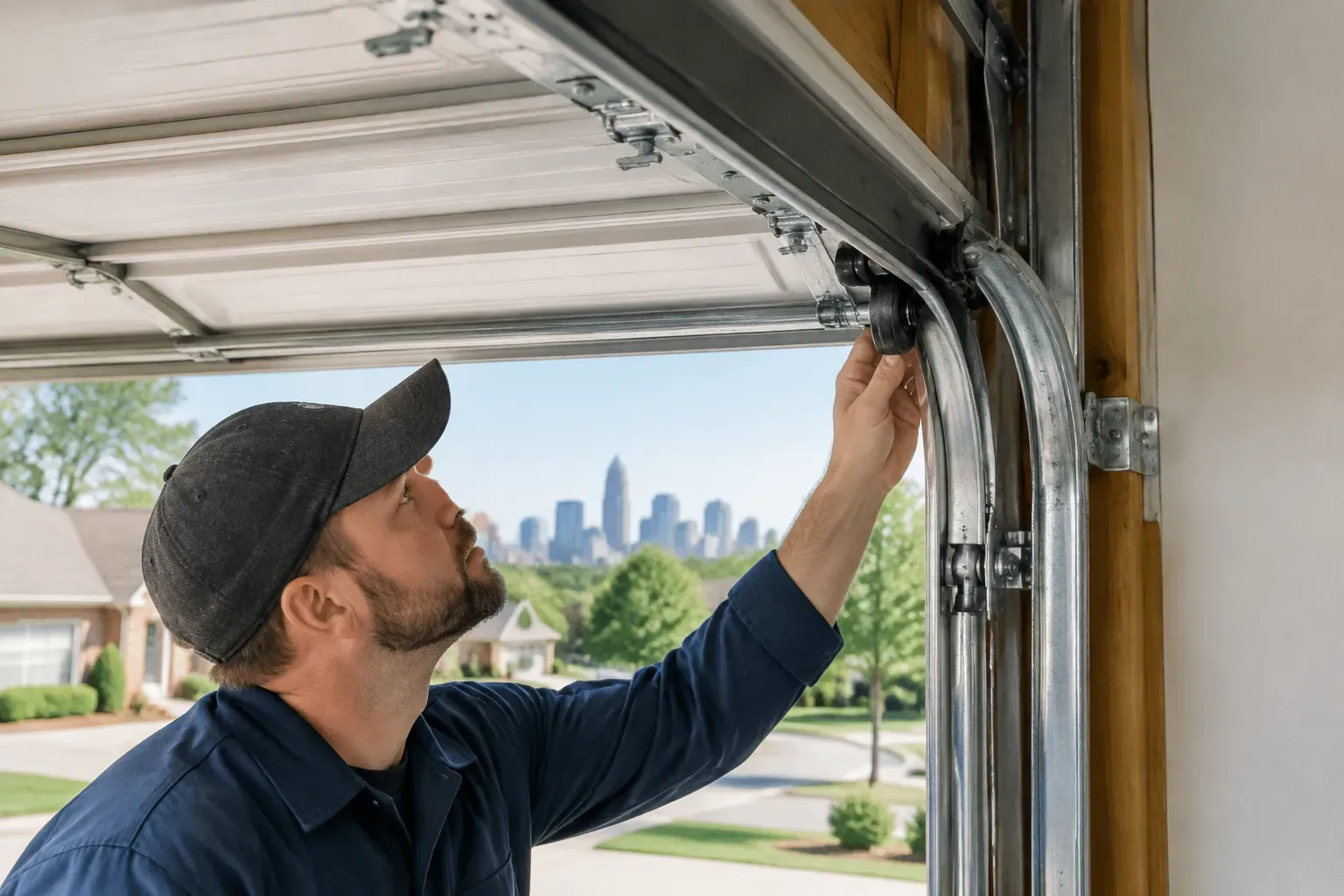
What Causes Garage Door Rollers to Wear Out or Come Off the Track?
Garage door rollers wear out from repeated use, friction, failed or contaminated bearings, corrosion, poor lubrication, and misalignment. A roller usually comes off the track for a different reason: a bent or loose track, damaged hinge, cable issue, impact, or an out-of-balance door can force it out of position.
If the door is noisy, shakes, binds, looks crooked, or has a roller outside the track, stop treating it as a simple noise problem. The roller, hinge, track, cables, springs, and door panels work together. QuickFix Garage Door Service – Charlotte NC can help Charlotte-area property owners identify which part of that system needs attention.
Quick Answer
Worn rollers may squeal, grind, rattle, develop cracked wheels, or create excessive side-to-side movement. They can wear faster when dirt collects around the wheel or bearings, moisture contributes to corrosion, or the track is out of alignment.
A roller off the track is a stop-and-inspect condition. Do not keep running the door to see if it corrects itself. Continued operation can bend the track further, damage hinges or panels, pull a cable out of place, or leave the door unstable.
What makes garage door rollers wear out?
Every opening and closing cycle loads the wheel and its stem as the door moves through curved and vertical track sections. Normal use gradually creates wear, but several conditions can speed it up:
Bearing wear or contamination
Bearings allow the wheel to turn smoothly. When they become dirty, dry, corroded, or damaged, the wheel drags instead of rolling freely.
Friction from poor alignment
Tracks that are not properly aligned can make rollers rub, bind, or carry uneven force.
Corrosion
In the Charlotte area, humid weather, rain, and condensation can contribute to corrosion on steel wheels, bearings, fasteners, and track surfaces. Corrosion increases resistance, but it is not the only possible cause of failure.
Debris in the track
Pollen, dust, leaves, and garage debris can build up in the track or around roller stems. That buildup can interfere with smooth travel.
Damaged hinges or loose hardware
A hinge holds the roller in the correct path. If it is bent, cracked, loose, or pulling away from the panel, the roller can sit at the wrong angle.
Door balance problems
A poorly balanced door places extra load on multiple moving parts. The springs, not the opener, should carry most of the door's weight.
Seasonal temperature changes can also make an existing issue easier to notice. Lubricant behavior, metal movement, and changes in door materials may turn a marginal alignment problem into a noisy or jerky one, especially with frequent operation.
Why do rollers come off the track?
A worn roller can contribute to an off-track problem, but it is rarely safe to assume the wheel alone caused it. A roller may be pushed out of the track when the path itself is damaged or the door no longer travels squarely.
| Observable symptom | Possible cause | What inspection can confirm |
|---|---|---|
| Roller visibly outside the track | Bent track, loose track fastener, damaged hinge, cable issue, or impact | Track spacing, track mounting, hinge condition, cable routing, and panel alignment |
| Door looks crooked or one side hangs lower | Cable off the drum, spring issue, track damage, or panel/hinge damage | Cable position, drum condition, spring balance, and door level |
| Jerky movement at one spot | Dented track, debris, damaged roller, or loose hardware | The exact binding point and whether the track is pinched or misaligned |
| Loud grinding or squealing | Dry or failed bearings, roller wear, rubbing, or debris | Roller rotation, bearing condition, track cleanliness, and roller-to-track contact |
| Door shakes heavily while moving | Multiple worn rollers, track alignment issue, loose hardware, or balance concern | Roller play, fasteners, track alignment, and door balance |
Impact is another common trigger. A vehicle, stored item, ladder, or even a hard strike to a door section can bend a track or distort a hinge enough to change how a roller enters the curve. The visible dent may be small, while the effect on travel can be significant.
What do bad garage door rollers sound and look like?
Noise is an observable symptom, not a diagnosis. Squealing can point to dry bearings or friction, grinding may indicate rough roller movement or track contact, and rattling can come from loose hardware as well as rollers.
From a safe distance, look for cracked or chipped wheels, flat spots, rollers sitting outside the track, excessive wobble, visibly bent track sections, loose brackets, separated hinges, or hanging cables. Avoid touching cables, springs, bottom fixtures, or a door that is not fully supported.
A door that reverses, stops, or moves inconsistently can also involve the opener or its safety system rather than the rollers. If the mechanical door travels poorly by hand after it has been safely disconnected by a qualified person, the issue may be in the door system. If the door moves smoothly but power operation is erratic, Charlotte garage door opener repair may be the more relevant service path.
Are nylon or steel rollers better for your door?
Roller material is only one part of the decision. Correct fit, wheel condition, bearing quality, hinge compatibility, and track alignment matter just as much. A technician should select a replacement compatible with the specific door and correct the cause of premature wear.
Nylon rollers
Nylon rollers are commonly chosen for quieter operation. They can still wear or bind if the bearings fail, debris accumulates, or the tracks and hinges are misaligned.
Steel rollers
Steel rollers are a traditional option and may be used on some door systems. They can be affected by corrosion, lubrication condition, bearing wear, and rough track contact.
Changing roller material may help with sound or expected operating characteristics, but it will not straighten a bent track, correct a damaged hinge, or resolve a cable problem. Recurring failure in the same area is a reason to inspect the complete system rather than repeatedly replacing the wheel.
What should you do when a roller comes off the track?
The safest response depends on what the door is doing at that moment. If it is crooked, stuck partway, unusually heavy, or has a loose cable, keep people and vehicles away from the opening and do not operate it with the remote or wall button.
- Stop using the opener and do not attempt repeated open-and-close cycles.
- Keep the area clear, especially if the door is partially open, leaning, or visibly uneven.
- Look from a safe distance for a roller outside the track, bent track section, damaged hinge, hanging cable, or obvious obstruction.
- Do not pull on cables, remove bottom brackets, adjust springs, or pry the track apart.
- Arrange an inspection that addresses the roller and the underlying alignment, track, cable, or balance concern.
For a door that is off track or binding, garage door repair in Charlotte can include a diagnosis of the connected components instead of treating a visible roller as the only issue. In Waxhaw, an opener that strains or stops may also deserve separate evaluation through Waxhaw garage door opener repair, particularly after the mechanical door problem has been addressed.
What should a technician inspect after a roller problem?
A meaningful inspection goes beyond the damaged wheel. The goal is to determine why the roller wore out or left the track, then correct only the work the door actually needs.
A technician may inspect:
- Roller wheels, stems, and bearing movement
- Hinges and their attachment points on each panel
- Vertical and horizontal track condition, spacing, and fasteners
- Track dents, pinches, corrosion, and alignment
- Cable routing and drum condition
- Spring balance and whether the door feels unusually heavy
- Door sections, reinforcement points, and signs of impact
- Opener travel after the mechanical door system is operating correctly
This system-wide approach matters in the Charlotte metro because doors of different ages can have different failure patterns. An older door may have accumulated roller, fastener, or track wear, while a newer installation can still develop an alignment or impact issue. Neither situation should be diagnosed from roller age alone.
Can maintenance help prevent roller and track problems?
Routine care can reduce avoidable friction and help reveal problems early. It cannot prevent every failure, especially damage caused by impact or a suddenly displaced cable, but it can make warning signs easier to catch before they become an off-track event.
Use only manufacturer-approved cleaning and lubrication practices for your door. Keep loose debris out of the track, watch for unusual noise or vibration, and arrange service if the door starts pulling to one side or changing speed. Avoid coating the track with heavy lubricant, because it can attract dirt and create a messy surface that holds debris.
The common mistake is waiting until the door becomes fully stuck. A new squeal or a brief bind does not prove a major repair is needed, but it is useful evidence that the system deserves a closer look.
The practical takeaway
Treat a worn or off-track roller as a clue, not a standalone verdict. Stop using an unstable door, record the symptoms you can safely see and hear, and have the roller, track, hinges, cables, and balance checked together so the underlying problem is addressed.
Ready to discuss your project?
If your garage door is noisy, binding, or off track in Charlotte, a professional inspection can identify whether the roller or another connected part is responsible.
FAQ
Can I keep using my garage door if one roller is off the track?
No. Stop operating the door if a roller is outside the track. Running it can worsen track damage, strain the opener, pull the door farther out of alignment, or create a fall hazard if the door becomes unstable. Keep the opening clear and arrange an inspection, especially if the door is crooked, partly open, or accompanied by a loose cable.
How can I tell if my garage door rollers need replacement?
Look for cracked or worn wheels, pronounced wobble, rough movement, repeated squealing, grinding, or rollers that no longer sit correctly in the track. These signs suggest a problem but do not identify the exact cause by themselves. A roller can wear because of its own bearing condition, but it can also be damaged by a misaligned track, hinge issue, or balance problem.
Is a noisy garage door always caused by bad rollers?
No. Rollers are a frequent source of squealing or rattling, but loose hinges, track contact, springs, cables, and opener-related vibration can make similar sounds. Note where in the travel the sound occurs and whether the door shakes, binds, or sits unevenly. Those observations help narrow down the inspection without assuming one part is responsible.
Can a bent track make garage door rollers wear out faster?
Yes. A bent, pinched, loose, or misaligned track can force a roller to rub or drag instead of following a smooth path. That extra friction can damage the wheel or bearing over time and can eventually push the roller out of place. Track correction is often necessary before replacement rollers can perform properly.
Should I replace one garage door roller or all of them?
Replacing one damaged roller can be appropriate when the remaining rollers and the rest of the system are in sound condition. If several rollers show wear, or if the door is noisy and shaky throughout travel, a broader evaluation may make more sense. Ask whether the issue is isolated or whether alignment, hinge condition, and balance are affecting multiple rollers.
Why does my opener struggle after a roller problem?
The opener may be reacting to increased resistance from dragging rollers, a bent track, or a door that is no longer balanced or aligned. It should not be used to force a damaged door through its path. For more guidance on separating an opener concern from a door-system issue, read this guide to repairing or replacing a garage door opener.
Can I lubricate rollers myself to stop the noise?
Basic manufacturer-approved lubrication may help if the issue is minor and the door is otherwise operating normally. It will not repair cracked wheels, failed bearings, bent tracks, damaged hinges, or a roller that has left the track. Avoid lubricating the track itself with products that collect dirt, and do not use lubrication as a reason to keep operating an unstable door.
What else should be checked when a roller comes off?
The inspection should include tracks, hinges, fasteners, cables, drums, springs, panel alignment, and door balance. An opener can also need attention after mechanical binding has been corrected. Learn how professional evaluation supports smoother operation in this overview of professional garage door opener repair and safety.