

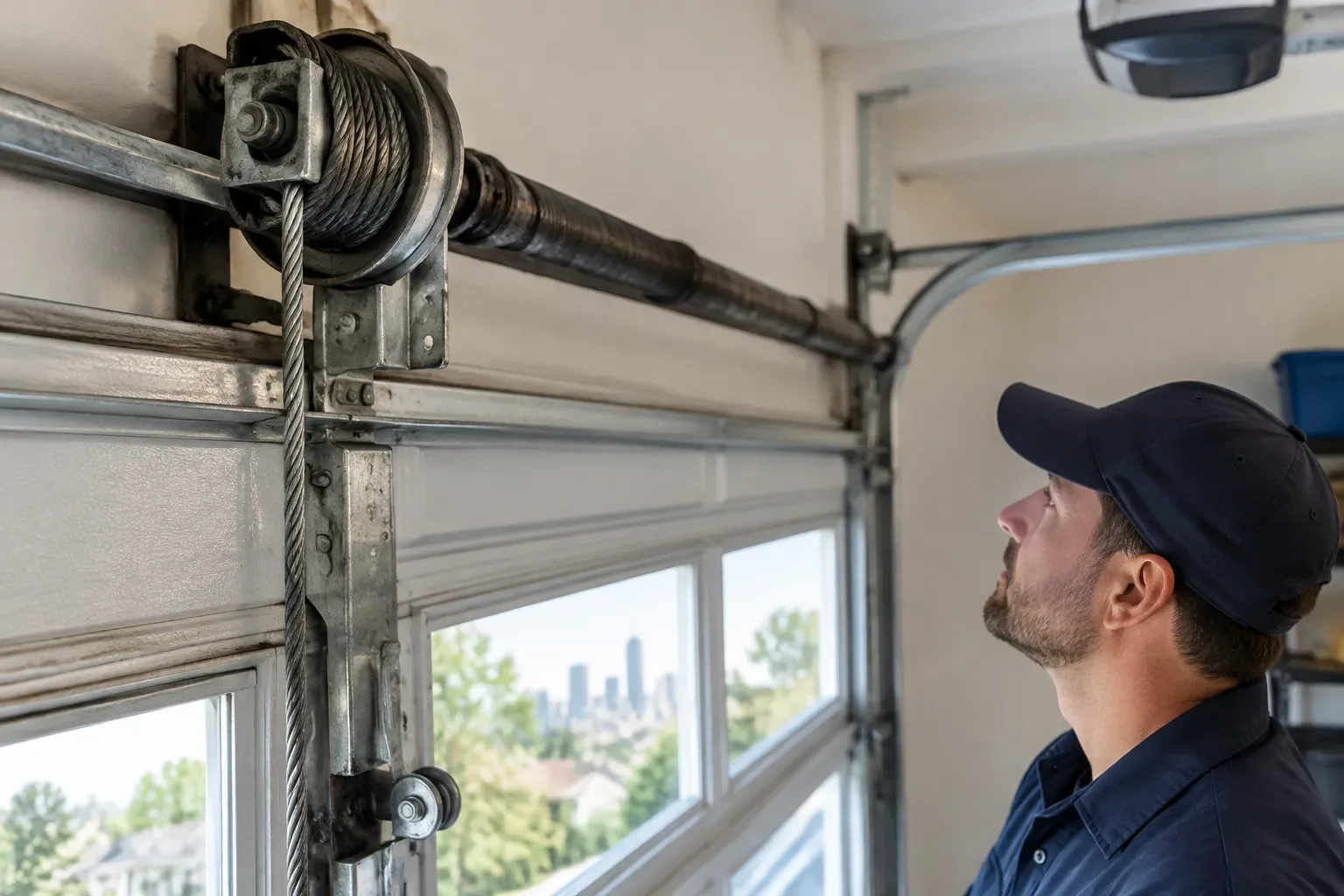
How to Tell If a Garage Door Cable Is Frayed Before It Breaks
A frayed garage door cable often looks fuzzy, split, flattened, kinked, rusty, or uneven compared with the cable on the other side. You may also notice a loose cable, a door that rises crooked, new scraping sounds, or uneven movement. These signs do not prove the cable alone is failing, but they do mean the door should be observed carefully and evaluated before normal use continues.
Do not pull, straighten, or test a suspect cable by hand. Garage door cables work alongside high-tension springs and drums, so a visibly damaged or displaced cable is a reason to stop operating the door and arrange an inspection with QuickFix Garage Door Service – Charlotte NC.
Quick Answer
Look at both lift cables while the door is fully closed and stationary. Broken wire strands, a fuzzy appearance, corrosion, kinks, flattened spots, slack on one side, or a cable that has come off its drum are warning signs. Stop using the opener if you see exposed strands, major rust, a cable off the drum, or a door that is crooked or partly unsupported. A professional needs to determine whether the cable is the only damaged part or whether a spring, drum, pulley, roller, track, or balance issue caused the wear.
What does a frayed garage door cable look like?
Lift cables are typically steel wire ropes positioned near the left and right edges of the door. They wind around drums above the opening as the door travels. From a safe viewing distance, compare each cable for changes in texture, shape, and position.
Broken or separated strands
Individual wires may stick out from the cable, making it look hairy or fuzzy. This is one of the clearest signs that the cable's strength has been reduced.
Kinks or flattened sections
A cable should follow a smooth path. A sharp bend, crushed area, or flattened stretch can interfere with how it winds and may create further wear.
Rust or pitting
Orange-brown corrosion, rough texture, or small pits on steel hardware deserves attention. Charlotte's humid, rainy conditions can contribute to corrosion on exposed metal over time, though rust alone does not prove immediate failure.
Slack or a cable off the drum
A cable that hangs loose, overlaps itself, or has slipped out of the drum groove is not tracking correctly. Do not run the door to see whether it reseats itself.
A clean-looking cable is not automatically safe, and a noisy door is not automatically a cable problem. The goal is to recognize changes early, not to diagnose the system from one symptom.
Which door movements can point to a cable problem?
Operational changes give useful context, especially when paired with visible wear. Watch the door from a safe distance during ordinary use only if no cable damage, slack, or displacement is already visible.
Common observations include:
- The door rises or lowers unevenly, with one side ahead of the other.
- The door shifts sideways, binds, or stops partway through travel.
- New scraping, popping, or snapping sounds occur near the top corners or tracks.
- One cable appears looser after the door moves.
- The bottom of the door sits crooked when closed or partway open.
These are symptoms, not final diagnoses. A loose cable may be related to a damaged drum, a worn pulley, a balance problem, track damage, roller trouble, or a spring issue. A technician can confirm the underlying condition by inspecting cable routing, drums, pulleys, springs, rollers, tracks, balance, and opener operation. For broader mechanical concerns, review options for garage door repair in Charlotte.
How can you inspect a cable without touching it?
Keep the inspection visual and keep the door stationary. Do not remove covers, loosen brackets, disconnect springs, or move the cable onto a drum.
- Close the garage door fully if it can close smoothly and safely. If it is crooked, stuck, slack on one side, or visibly damaged, leave it in its current stable position and do not force it.
- Stand several feet back and look at both vertical sides of the door in good lighting. Use a flashlight from the floor if needed, rather than climbing near the hardware.
- Compare the left and right cables for fuzziness, broken strands, kinks, corrosion, flattening, and slack. Also look for a cable that is not seated in the drum groove above the door.
- Take a clear photo from a safe position if you need help describing the issue when scheduling service.
- Avoid further opener use if any warning sign is visible. A professional can assess the full system and determine the appropriate repair.
When should you stop using the garage door immediately?
Stop using the door when there are exposed strands, severe corrosion, a cable off the drum, obvious slack, a snapped cable, sudden loud hardware movement, or a door hanging crooked. Repeatedly pressing the opener in these conditions can worsen the damage or leave the door unsupported on one side.
Do not attempt to rewind or replace the cable yourself. Cables transfer the force created by the spring system, and moving related parts without the correct tools and training can be hazardous. The safer alternative is a professional assessment, particularly if the door is stuck or cannot be secured normally.
Why would only one garage door cable become loose?
A loose cable on one side does not necessarily mean that cable simply stretched. Possible causes include a cable that slipped off its drum, a damaged or misaligned drum, a door that is out of balance, a track or roller issue, or a spring-related problem. In some cases, an impact to the door can also affect how the system travels.
The professional finding matters because the repair should address the cause, not just restore tension to the cable. If the door is uneven or scraping, it may need a more complete mechanical assessment rather than a cable-only fix. Related symptoms are covered in this guide to common garage door repair problems and how experts address them.
Can the opener cause a cable to fray?
An opener does not directly carry the door's lifting load in the way springs and cables do, but an operating issue can make a problem more noticeable. For example, a door that binds or moves unevenly may strain multiple parts of the system. Conversely, a damaged cable can make the opener appear to be the problem because the door no longer travels smoothly.
A technician should separate an opener fault from a door-balance or hardware fault before repair begins. If the motor runs but the door behaves unevenly, both the opener and the mechanical system may need inspection. Learn more about garage door opener repair in Charlotte when the operator itself may also be involved.
What should a professional inspect after finding cable damage?
Cable replacement may be the right solution, but it is not always the whole repair. A proper assessment should check both cables, cable routing, drums, pulleys where applicable, spring condition, rollers, tracks, door alignment, manual balance, and opener travel after the mechanical issue is addressed.
That scope helps identify why the damage occurred. For example, a cable that repeatedly rubs, slips, or winds improperly may be reacting to another worn or misaligned component. Routine checks through garage door maintenance in Charlotte can help identify developing wear before a visible failure interrupts access to the garage.
What is the safest next step if you spot fraying?
Photograph the cable from the floor, stop using the door if damage is visible, and explain what you observed when arranging service. Mention whether the door is closed, open, crooked, stuck, noisy, or has a loose cable. Those details help a service professional understand the situation before arrival.
For Charlotte-area property owners, the practical takeaway is simple: treat exposed wire strands or a displaced cable as a stop-use issue, not a maintenance task to put off. A full inspection can confirm what failed and what needs attention to restore safe, even travel.
Ready to discuss your project?
If you notice fraying, slack, or uneven travel in Charlotte, request a professional cable and door-system inspection.
FAQ
Can I use my garage door if the cable is slightly frayed?
It is safer not to keep using a door with visible broken strands, fuzziness, kinks, or a cable that appears damaged. Even slight fraying means the cable has lost some integrity, and normal travel can worsen the condition. Leave the door stationary if possible and arrange an inspection rather than testing it through repeated opening and closing cycles.
What happens if a garage door cable snaps?
The door can become uneven, jam in the tracks, drop on one side, or remain unsupported depending on its position and the rest of the system. Stop using the opener and keep people away from the door and hardware. Do not try to lift a crooked or partly open door manually. A technician should inspect related springs, drums, tracks, and rollers before returning it to service.
Is rust on a garage door cable always dangerous?
Not every spot of surface rust means a cable will fail immediately, but rust or pitting is a reason for professional evaluation because corrosion can reduce the condition of steel over time. This is especially worth watching on exposed hardware in Charlotte's humid and rainy climate. Do not scrape, lubricate heavily, or handle a corroded cable as a way to test it.
Why is my garage door hanging crooked?
A crooked door can be associated with a loose or damaged cable, but it can also result from spring, drum, roller, track, or balance problems. Because the same symptom has several possible causes, avoid assuming the cable is the only issue. This overview of professional opener repair and smooth door operation explains why mechanical and operating checks should be considered together.
Can a garage door cable be repaired instead of replaced?
A cable with broken strands, significant corrosion, flattening, or kinks is generally evaluated for replacement rather than patched or tied together. A temporary repair can create an unreliable lifting path and does not correct the reason the damage happened. The appropriate remedy depends on the cable's condition and inspection findings from the surrounding door hardware.
How do I know if the cable came off the drum?
You may see the cable hanging loose near the upper corner, crossing over itself, sitting outside the grooved drum, or appearing unevenly wound compared with the other side. Do not run the opener to try to pull it back into place. A cable off the drum can be related to balance or alignment problems that need to be checked before the door moves again.
Could my garage door opener be the reason the door is uneven?
The opener can have its own travel, force, or drive issues, but an uneven door often points to a mechanical condition involving cables, springs, drums, rollers, or tracks. The distinction requires inspection. For residents near Waxhaw dealing with a motor that runs while the door travels poorly, Waxhaw garage door opener repair can help address the operator side after the door's mechanical condition is evaluated.
Should I lubricate a frayed garage door cable?
No. Lubricant will not repair broken wire strands, kinks, or corrosion damage, and it may make it harder to inspect the cable clearly. Avoid applying products as a substitute for evaluation. If the cable is visibly compromised, leave the door still and have a professional determine whether cable replacement and related adjustments are needed.