

Backing into a garage door at low speed can look like a minor accident. Maybe one panel has a dent, the bottom section is pushed inward, or a roller looks slightly out of position. If the door is still standing, the first instinct is often to press the opener and see whether it works.
That can be the wrong test.
Consider a typical service-call situation. A homeowner accidentally bumps the closed door while backing out. The visible damage appears limited to the lower section, so they try the opener. The door starts moving but immediately becomes crooked and makes a scraping sound. What initially looked like panel damage now requires inspection of the rollers, tracks, hinges, cables, sections, and counterbalance system. The impact may have changed how several components line up even though only one area looks damaged.
The practical lesson is simple: after an impact, the amount of visible damage does not always tell you how well the door can still operate.
If a vehicle, lawn equipment, or another object has struck your door, professional evaluation of the damaged door and operating system can determine whether the problem is cosmetic, repairable mechanical damage, or something more extensive.
What Can Be Damaged When Something Hits a Garage Door?
A sectional garage door is more than the panels you see from outside.
The sections are connected by hinges. Rollers guide them through tracks. Springs counterbalance the weight, while cables work with the lifting system. The opener then moves a door that should already be mechanically capable of traveling smoothly.
An impact can affect one component or several.
Depending on where and how the door was struck, an inspection may reveal:
- Bent or creased panels
- Damaged hinges
- Rollers pushed out of position
- Bent or shifted tracks
- Damaged bottom fixtures
- Changes in cable position
- Misalignment between sections
- A door that no longer sits squarely in the opening
- New resistance during opening or closing
- Damage affecting the opener’s ability to move the door
A homeowner may look at a dent and assume it only needs cosmetic work. The more important question is whether that dent has changed the geometry of the section enough to interfere with hinges, rollers, or track movement.
This is why garage door repair after an impact should begin with an inspection rather than trying to straighten the visible damage first.
For homeowners who want to compare impact damage with other common operating problems, explore practical garage door troubleshooting and maintenance guidance.
Should You Try Opening the Door After an Impact?
Before pressing the remote, look at the door from both inside and outside if you can do so safely.
Does it appear crooked? Has a roller left the track? Is a track visibly bent? Does a cable look loose or displaced? Are two sections no longer sitting correctly together?
If any of those conditions are present, repeatedly testing the opener is not a useful next step.
DASMA advises that a door that does not move smoothly may have an unsafe condition and recommends trained professionals for repairs involving springs and cables. It also warns that bottom brackets are connected to the spring system and can be under extreme tension.
A damaged door may also place unexpected resistance on the opener. Increasing the force setting or repeatedly pressing the remote does not correct bent hardware or misalignment.
A homeowner can safely make a visual inspection from a distance. Avoid pulling on cables, repositioning rollers, loosening bottom brackets, adjusting springs, or trying to force a damaged section back into shape while the door remains assembled.
If the impact has left the door visibly crooked or mechanically unstable, schedule an inspection before trying to operate it normally.
A Bent Panel Does Not Tell the Whole Story
Panel damage varies considerably.
A shallow cosmetic dent in an otherwise properly operating section is different from a deep crease that has changed the shape or structural condition of the panel. The location matters too. Damage near hinges, roller brackets, or the bottom section can affect more than appearance.
Here is another realistic service scenario. A homeowner reports that the lower panel was hit but says the opener must now be the problem because the door starts upward and stops. Inspection of the movement shows something different. The damaged section has changed how one side travels, and a roller no longer moves smoothly through its track.
What appeared to require garage door opener repair Charlotte NC actually begins with physical door damage.
The takeaway is not that every dent requires major repair. It is that the door needs to be judged by both its physical condition and its operation.
The U.S. Consumer Product Safety Commission has long advised homeowners to periodically make sure track rollers and other hardware are functioning properly. After an impact, those components deserve particular attention because their alignment may have changed suddenly rather than through gradual wear.
If your door has been struck and now hesitates, scrapes, shakes, or travels unevenly, professional diagnosis can determine whether the panels, rollers, tracks, or other components were affected.
Why Rollers and Tracks Need Attention After a Collision
Tracks and rollers determine the path the door follows. Even relatively localized impact damage can affect that path.
For example, a vehicle striking the lower corner of a closed door can push a section inward or sideways. That movement may place a roller at an unusual angle or shift how the section sits relative to the vertical track.
The next time the opener runs, the roller may scrape, bind, or attempt to travel through a track that is no longer correctly positioned.
A useful clue is whether the door becomes crooked immediately after it begins moving. Another is a new scraping or popping sound that did not exist before the accident.
Do not try to correct significant track damage by loosening brackets and pulling the track into position. The relationship between tracks, rollers, door sections, cables, and the counterbalance system needs to remain correct.
For impact damage that has changed the door’s movement, professional garage door repair can evaluate the tracks, rollers, panels, and lifting system together instead of repairing only the most visible dent.
Cable and Spring Problems May Not Be Immediately Visible
After an impact, homeowners naturally focus on the area that was hit. A bent panel or displaced roller is easy to see. Changes involving the lifting system can be less obvious.
Springs and cables work together to counterbalance and control the door’s weight. If an impact leaves the door crooked, shifts a section, or causes one side to bind, the lifting system may no longer operate under normal conditions.
A homeowner might notice that one side begins rising before the other. Another door may appear level when closed but tilt as soon as it starts moving. These symptoms do not automatically prove that a cable or spring has failed, but they are good reasons to stop operating the system and have the complete assembly inspected.
This is also where DIY repair becomes particularly risky. Do not loosen bottom brackets, reposition lifting cables, or adjust torsion or extension springs. These components can be under significant mechanical tension.
DASMA’s residential safety guidance recommends that repairs involving springs, cables, and related high-tension components be performed by trained door systems technicians. (DASMA residential garage door safety guidance)
If the door became crooked or uneven immediately after an accident, have the lifting system and impact damage evaluated together rather than trying to straighten the door through spring or cable adjustments.
What If the Door Still Opens and Closes After Being Hit?
A functioning opener does not prove that the door escaped mechanical damage.
Some impact-damaged doors continue operating. The more useful question is whether they operate the same way they did before the accident.
Watch for new symptoms such as:
- Scraping during part of the travel
- Shaking as sections enter the curved tracks
- A new gap under one corner
- One side moving differently from the other
- Popping or grinding sounds
- A roller that looks incorrectly positioned
- Increased opener strain
- Sections rubbing against each other
- The door stopping or reversing unexpectedly
A homeowner may continue using a door because the motor successfully pulls it open. But if one damaged section is causing additional resistance on every cycle, continued operation can place unnecessary load on other parts of the system.
This is why professional garage door Service after an impact should evaluate movement, not just whether the opener responds.
If the door is still operating but behaves differently than it did before the collision, review practical guidance for recognizing developing garage door problems and avoid repeatedly cycling it simply to test whether the symptoms disappear.
A Real Charlotte Repair Example Shows Why Full Inspection Matters
Accidental impact damage is not just a theoretical service situation.
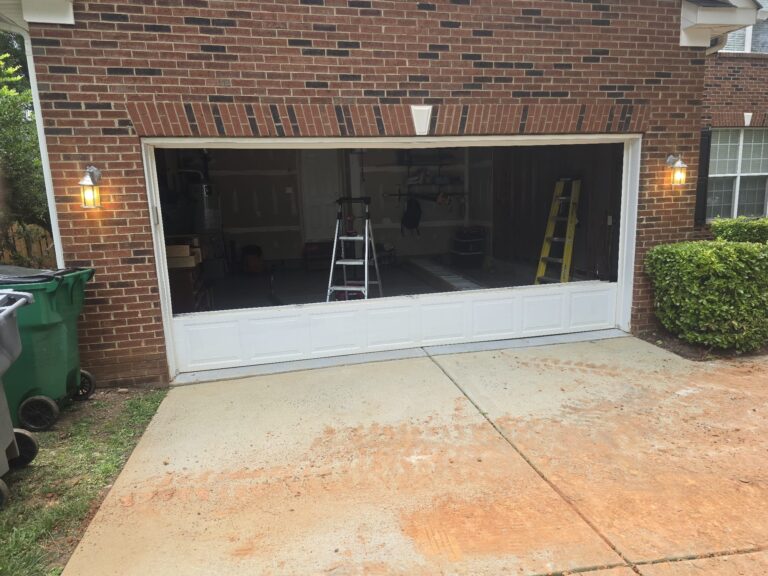
Customer feedback associated with Quick Fix Garage Door Service describes a situation where a vehicle struck a garage door, leaving the door bent and several rollers out. The repair involved addressing the damaged condition and getting the door operational again. You can review the company’s Google Business Profile and local customer experiences when evaluating its Charlotte service history.
That experience illustrates an important point about impact damage. A collision can affect more than the panel that shows the dent.
If rollers are displaced, the tracks and related hardware need attention. If the door becomes crooked, the lifting system needs to be considered. If the opener struggles afterward, the mechanical door should be evaluated before assuming the motor itself has failed.
The practical takeaway is to inspect the system as a whole.
A door that has been struck should not automatically receive overhead garage door repair focused only on appearance. Professional evaluation of the panels and operating components can determine how far the impact actually traveled through the system.
Can a Damaged Garage Door Panel Be Repaired?
Sometimes. The answer depends on the location, severity, and type of damage.
A minor dent that has not changed the section’s shape enough to affect operation is different from a deep crease, cracked section, or panel that no longer aligns correctly with the sections above and below it.
The technician also needs to consider whether the damage is near hinges, roller brackets, or other attachment points.
A panel that looks repairable from the driveway may behave differently once the door moves. If the section flexes unusually, causes a roller to bind, or prevents the door from sitting squarely, the decision becomes mechanical rather than cosmetic.
Availability of compatible replacement sections can also matter. Door model, manufacturer, age, construction, and design may affect whether an individual section can reasonably be replaced.
This is why garage door replacement should not be assumed after every collision. In some situations, repairing or replacing an affected section may be enough. In others, extensive structural damage can make replacement of the complete door more practical.
Homeowners considering those options can explore additional garage door repair and maintenance guidance before deciding whether visible panel damage necessarily means the entire system needs replacement.
How Charlotte Weather Can Matter After the Door Is Damaged
Charlotte’s climate does not determine whether an impact-damaged door can be repaired, but it can make certain types of damage more important to address.
A bent lower section may no longer seal properly against the floor. Damage along an edge can leave a new opening around the perimeter. During periods of heavy rain or humid summer weather, those gaps can allow more moisture, outdoor air, and debris into the garage.
The effect can be especially noticeable with an attached garage.
A damaged panel may also expose material that was previously protected by the door’s exterior finish. The importance of that exposure depends on the door material and severity of the damage, so it should be evaluated rather than assumed to be harmless.
The bigger concern remains mechanical operation. Weather sealing should not be repaired while ignoring a door that has become crooked, unstable, or difficult to move.
If an accident has left new gaps along with physical or operational damage, professional inspection can determine what needs attention before normal use resumes.
Why Repeatedly Testing a Damaged Door Can Make Things Worse
After an impact, it is natural to press the remote again to see whether the door still works. One careful observation may provide useful information, but repeatedly cycling a visibly damaged door can create additional problems.
Imagine a lower section has been pushed inward and one roller is no longer sitting correctly. The opener may still have enough force to move the door, but every cycle asks that damaged roller to travel through the track. If the door is already crooked, other rollers, hinges, tracks, and lifting components may also be operating under abnormal conditions.
The opener should not be used to force a damaged door through resistance.
Stop regular operation if you notice the door becoming crooked, a roller leaving the track, significant scraping, abnormal cable position, or movement that appears unstable. DASMA specifically advises leaving spring and cable repairs to trained professionals because these components operate under significant tension.
For impact damage that has changed how the system travels, professional evaluation of the door and affected operating components is a better next step than repeatedly testing the opener.
Does an Accident Mean the Garage Door Opener Is Damaged Too?
Not necessarily.
The opener may behave differently after a collision even when it was not directly damaged. If a bent panel, displaced roller, or track problem increases resistance, the motor suddenly has a much more difficult door to move.
That can make an opener sound strained, stop during travel, or fail to complete a cycle.
A homeowner may therefore start searching for garage door opener repair Charlotte NC when the underlying problem is actually mechanical damage to the door.
There is another reason to inspect the opener after an accident. Automatic residential garage door operators are subject to federal entrapment-protection requirements, and their safety systems need to function correctly. If the collision affected the door’s travel or anything associated with the safety system, normal operation should not simply be assumed.
The practical approach is to inspect the opener and mechanical door together. For more information about symptoms that can help distinguish opener trouble from door-related resistance, browse practical garage door troubleshooting guidance.
Repair the Damage or Replace the Garage Door?
Accidental impact does not automatically mean garage door replacement is necessary.
The decision depends on what was damaged and whether the door can be restored to proper operation.
A localized problem may be repairable when the remaining sections, tracks, lifting system, and related hardware are in serviceable condition. A different recommendation may make sense when several sections are severely bent, the door has lost structural integrity, compatible replacement sections are unavailable, or the collision has caused extensive damage across the system.
A real customer experience published on Quick Fix Garage Door Service’s Charlotte repair page is useful here. The customer reported hitting the door with a car, leaving it bent with several rollers missing. The review states that the door was repaired successfully. This is also the type of local service experience that can be considered when reviewing the company’s Google Business Profile.
That example demonstrates why replacement should not be assumed from appearance alone. Even obvious impact damage needs to be inspected before deciding whether targeted overhead garage door repair or complete replacement is appropriate.
If you are unsure which option makes sense, have the extent of the collision damage professionally assessed before making the repair-versus-replacement decision.
What Should a Professional Inspection Check After an Impact?
A useful post-impact inspection should extend beyond the dent.
The technician first needs to understand where the door was struck and what happened immediately afterward. Did the homeowner try operating it? Did one side rise first? Did a roller leave the track? Did the opener stop or reverse?
From there, the inspection can follow the path of the impact through the system.
Depending on the damage, that may include:
- Door sections and reinforcement
- Hinges and brackets
- Rollers and roller position
- Vertical and horizontal tracks
- Cable condition and position
- Spring and counterbalance operation
- Door alignment
- Bottom fixtures
- Opener operation
- Safety sensors and reversal features
- New gaps around the closed door
This complete-system approach matters because a damaged panel can change roller movement, and displaced rollers can affect how the door travels through the tracks. Quick Fix Garage Door Service lists repair work involving rollers, tracks, cables, springs, openers, panels, and related operating problems in Charlotte.
If you want to understand other symptoms that may appear after physical damage, explore additional garage door repair and maintenance information.
What to Do After Your Garage Door Has Been Hit
Start with observation, not repair.
Keep people and pets away from the opening and look at the door from a safe position. Check whether it is visibly crooked, whether rollers remain in the tracks, whether the panels still line up, and whether any cable looks loose or damaged. Do not touch springs, lifting cables, bottom brackets, or unstable hardware.
If the door looks structurally normal and no obvious damage is present, follow the manufacturer’s instructions for any further checks. If it is crooked, off-track, severely bent, or mechanically unstable, stop there.
For Charlotte homeowners searching for garage door repair near me after a collision, Quick Fix Garage Door Service provides repair services involving tracks, rollers, cables, springs, openers, damaged panels, and complete door replacement when necessary. You can explore professional options for diagnosing impact damage, review the company’s local customer experiences on Google, and use the garage door knowledge center for additional homeowner guidance.
The most important takeaway is that a door does not have to fall off its tracks for an impact to matter. Changes in alignment, roller position, track condition, panel shape, or lifting-system operation can all affect what happens during the next cycle.
If your door has been hit and no longer looks or operates normally, schedule a professional inspection before returning it to everyday use.
FAQs About Garage Door Repair After Accidental Impact
1. Can I use my garage door after accidentally hitting it with my car?
It depends on the condition of the door. If it is visibly crooked, a roller has left the track, a cable looks loose, the tracks are damaged, or the sections no longer align correctly, avoid repeatedly operating it.
A door can still respond to the opener while mechanical damage is present. If you are uncertain about its condition, have the impact damage professionally evaluated before normal operation resumes.
2. What should I check immediately after hitting my garage door?
From a safe position, look for bent sections, crooked alignment, displaced rollers, obvious track damage, unusual gaps, and loose-looking cables. Do not touch or adjust springs, cables, bottom brackets, or unstable hardware.
The goal is to identify visible warning signs, not perform the repair yourself. You can review additional guidance about common garage door problems if you need help understanding what you are seeing.
3. Can a bent garage door panel be repaired?
Sometimes. A shallow dent that does not interfere with operation is different from a deeply creased or structurally damaged section. Location also matters, particularly when damage is close to hinges or roller brackets.
The condition of the complete system should guide the decision. Professional inspection of the damaged sections and related hardware can determine whether targeted garage door repair is practical.
4. Why is my garage door crooked after being hit?
An impact can affect panels, rollers, tracks, hinges, cables, or other components that control how the door travels. The visible tilt does not identify which component is responsible.
If one side moves differently from the other, avoid trying to level the door by adjusting cables or springs yourself. DASMA warns that springs, cables, bottom brackets, and related components can be under high tension and should be serviced by trained professionals. (dasma.com)
If the door is noticeably crooked, schedule an inspection of its alignment and lifting system.
5. Can an accidental impact damage the garage door opener?
It can affect opener operation indirectly even when the motor was not struck. A bent section, displaced roller, or damaged track can increase resistance and make the opener struggle.
This is why garage door opener repair Charlotte NC should not automatically be the first recommendation after a collision. Having both the mechanical door and automatic opener evaluated can identify where the problem actually begins.
6. Should I try putting an off-track roller back myself?
No. An off-track door can involve unstable door weight, damaged hardware, cables, and the counterbalance system. Trying to reposition a roller without understanding why it came out can create additional risk.
Do not loosen tracks, bottom brackets, springs, or lifting cables to reposition the door. Instead, arrange professional service for a door that has come out of alignment.
7. Does impact damage mean I need garage door replacement?
Not necessarily. Garage door replacement becomes more relevant when the collision causes extensive section damage, structural problems, widespread hardware damage, or conditions that cannot reasonably be corrected through individual repairs.
Some impact-damaged doors can be repaired. Quick Fix Garage Door Service has published customer feedback describing a vehicle impact that left a door bent with several rollers out, followed by successful repair. You can also review local customer experiences through the company’s Google Business Profile.
For other repair-versus-replacement considerations, explore practical garage door information for homeowners.
8. Why does my garage door scrape after it was hit?
Scraping can occur when an impact changes the position of a section, roller, track, hinge, or related hardware. Where the scraping occurs can provide an important diagnostic clue.
Do not increase the opener’s force to push the door through the resistance. Professional evaluation of the tracks, rollers, and damaged sections can identify what changed during the collision.
9. Is garage door repair after an impact safe to do myself?
Simple visual checks are reasonable. Mechanical repairs involving springs, lifting cables, bottom brackets, off-track doors, major track adjustments, or unstable sections should be left to a trained professional.
Even if you are comfortable with general home repairs, these components can involve stored mechanical energy and significant door weight. The garage door resource center can help you distinguish basic homeowner maintenance from problems that deserve professional attention.
10. When should I call for garage door repair in Charlotte after an accident?
Professional service makes sense when the door is bent, crooked, off-track, scraping, closing unevenly, missing rollers, showing cable problems, or causing the opener to struggle after an impact.
For Charlotte residents searching for garage door repair near me or overhead garage door repair, the important first step is determining how far the collision damage extends beyond the visible panel. You can explore professional repair options for an impact-damaged door, review Quick Fix Garage Door Service’s local Google presence, or schedule an inspection after accidental garage door damage.