
Does your garage door feel heavier during a humid North Carolina summer? In Charlotte, the air often carries enough moisture to make every metal component in your home vulnerable. While many homeowners focus on AC units or roofing, the most hardworking part of your home often goes overlooked: the garage door spring. These high-tension components are the mechanical muscles of your garage system, responsible for lifting doors that can weigh several hundred pounds. When the humidity levels spike in the Piedmont region, the chemical reaction between moisture and high-carbon steel begins immediately.
Understanding the relationship between the local climate and your mechanical systems is vital for long-term home safety. A snapped spring can render your garage door useless or, worse, cause a dangerous collapse that threatens property and personal safety. This guide explores the science of oxidation, the specific geographical challenges of the Charlotte metro area, and how you can maintain your door to avoid sudden mechanical failure. We will dive deep into why your springs are failing and what specific steps you can take to extend their lifespan in a subtropical environment.
The Chemical Reality of Charlotte Humidity and Metal Fatigue
Charlotte is known for its beautiful greenery and lush landscapes, but that same environment creates a pressure cooker effect for garage hardware. Humidity is essentially water vapor suspended in the air, and in North Carolina, relative humidity frequently exceeds 80% during the summer months. When this vapor touches a cool metal surface like a steel torsion spring, it creates condensation at a microscopic level.
Oxidation and the Process of Surface Pitting
Oxidation is the primary enemy of any steel component. When water molecules and oxygen meet the iron in your springs, iron oxide or rust begins to form. In the early stages, this looks like a thin orange film that many homeowners dismiss as cosmetic. However, as the moisture persists, it leads to a phenomenon known as surface pitting. Pitting creates microscopic craters and jagged edges in the steel. Because garage door springs are under thousands of pounds of torque, these tiny pits become stress risers. As the spring cycles (opens and closes), the energy is concentrated at these pits rather than being distributed evenly across the coil. Eventually, the steel cannot handle the tension at those weak points and snaps with a sound often described as a gunshot.
Thermal Expansion and the Breathing Metal
Beyond moisture, the extreme heat that accompanies Charlotte humidity causes the metal to expand. At night, as temperatures drop slightly, the metal contracts. This constant breathing of the metal, combined with the immense weight of the door, accelerates metal fatigue. Over time, the molecular structure of the steel becomes brittle. This is why most spring failures occur during the transition between seasons or during mid-summer heatwaves when the temperature swings are most dramatic. If your springs are already over five years old, this thermal stress is often the final factor that leads to a break.
The Impact of Local Geography on Your Hardware
Charlotte’s unique geography plays a significant role in how often you should look at your garage door repair Charlotte needs. Situated in the Piedmont, the city acts as a basin for moisture trapped between the Appalachian Mountains to the west and the Atlantic coastline to the east.
The Pollen Paste Problem
In the spring, Charlotte is famous for its heavy yellow pollen. When this fine powder mixes with high humidity, it creates a sticky, acidic paste. This paste clings to the grease on your springs and tracks. Unlike clean grease, this mixture acts like sandpaper. As the spring coils rub against each other, the pollen-infused grit grinds away the protective coating of the steel, exposing the raw metal to the air. Cleaning your hardware during the peak of April and May is a localized necessity that homeowners in drier or less wooded climates do not have to worry about.
Seasonal Moisture Retention in Garages
Even in the cooler months, Charlotte experiences significant rainfall. The damp cold is just as dangerous as the humid heat. When you drive your car into the garage after a rainstorm, wet tires and body panels bring gallons of water into an enclosed space. This water evaporates and settles on the overhead hardware. Without proper ventilation, your garage becomes a humid microclimate even when it is 40 degrees outside. This trapped moisture is why we often see rusted springs even in garages that are technically closed all winter.
Advanced Maintenance for the North Carolina Homeowner
Maintenance in a humid climate is about more than just keeping things clean; it is about creating a chemical barrier between the metal and the corrosive air.
Why Lubricant Choice is a Critical Decision
Many homeowners reach for a can of standard WD-40, but this is a mistake that can actually shorten the life of your springs. Standard WD-40 is a solvent and a degreaser; it is designed to clean, not to provide long-term lubrication. In a humid environment, you need a silicone-based or lithium-based spray. These products are hydrophobic, meaning they actively repel water molecules. When applied correctly, the lubricant seeps into the gaps between the coils, ensuring that even if condensation forms, it cannot reach the surface of the steel. This simple barrier can add three to five years to the life of your springs.
Managing the Air Quality Inside Your Garage
If your garage feels like a sauna every time you walk into it, your springs are suffering. Improving ventilation is a high-yield strategy for protecting your investment. Installing passive vents in the garage door panels or using a small dehumidifier can significantly reduce the rate of oxidation. Furthermore, if your garage is attached to the house, ensure the seal between the garage and the living space is tight so that the AC system isn’t pulling moisture into the garage area through gaps in the doorway.
Professional Intervention and Safety Protocols
When a spring does break, the temptation to attempt a DIY fix is high, especially with the abundance of online tutorials. However, the physics involved in garage door tension are unforgiving.
The Physics of Torsion Springs
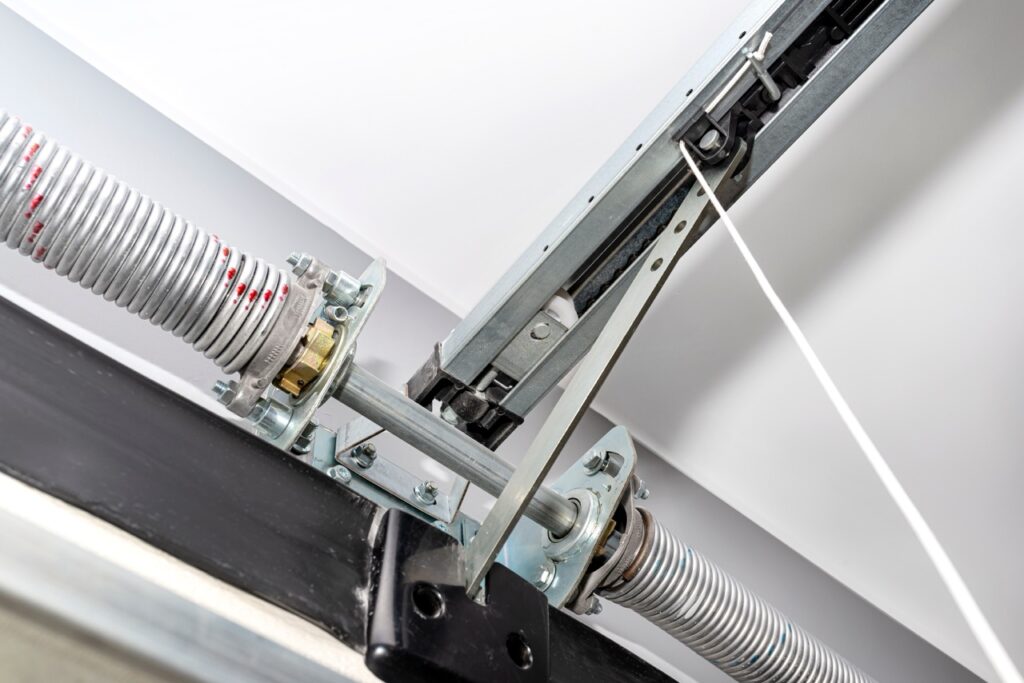
Torsion springs are wound tight using winding bars and locked into a shaft. The amount of energy stored in a fully wound spring is enough to cause catastrophic injury if released uncontrollably. Professional technicians use calibrated winding bars and safety cables to ensure that the tension is managed safely. Moreover, a professional can identify if the spring rate is correct for your door. If a previous owner installed the wrong size spring, your motor will work harder, leading to an expensive garage door openers failure in addition to the broken spring.
Upgrading to High-Cycle Coated Springs
For Charlotte residents, we often recommend high-cycle springs. While standard springs are usually rated for 10,000 cycles, high-cycle versions are rated for 20,000 to 50,000 cycles. These springs are often manufactured with a powder coating or a galvanized finish that provides an extra layer of defense against humidity. While the upfront cost is slightly higher, the cost per cycle is significantly lower, and the peace of mind during a humid July is invaluable.
Conclusion
The humidity in Charlotte is an unavoidable factor for every homeowner. From the pollen dump of spring to the heavy air of August, your garage door springs are constantly at risk of oxidation and fatigue. Taking care of your garage system ensures your home remains secure and your daily routine remains uninterrupted. Whether it is choosing high-cycle parts or simply performing a biannual inspection, a little attention goes a long way in the Carolinas. To stay informed on the latest industry standards and maintenance tips, you can explore our comprehensive resources and news to better understand the needs of your home.
If you find yourself stuck with a door that will not budge or notice the telltale orange glow of rust on your hardware, professional assistance is often the safest path forward. At Quick Fix Garage Door Service, we have spent years helping neighbors navigate the specific challenges of the North Carolina climate. Our team specializes in everything from urgent mechanical recovery to full system upgrades. We understand that your time is valuable and your safety is paramount. To learn more about our commitment to excellence and our history in the Charlotte area, you can view our background and service philosophy or browse our full range of customized residential and commercial solutions today. We are here to ensure that your garage door remains a reliable part of your home regardless of how high the humidity climbs.
FAQ Section
1. How often should I lubricate my springs in the Charlotte area?
Due to the high relative humidity in North Carolina, we recommend lubricating your springs and all moving hardware every 3 to 4 months. Regular application ensures that the moisture barrier remains intact throughout the changing seasons.
2. Can I use standard WD-40 on my garage springs?
No. Standard WD-40 is a degreaser and will actually remove the protective oils from the metal, making it more prone to rust. You should only use specialized silicone or white lithium garage door lubricants.
3. Why do garage door springs seem to break more often during the summer?
Summer brings the highest humidity and heat. The moisture accelerates rust, while the heat causes the metal to expand and become more pliable. This combination increases the likelihood of a break during operation.
4. What is the loud bang I heard in my garage?
If you heard a sound like a gunshot or a heavy metal snap, it is almost certainly a torsion spring breaking. The energy released from the coils creates a significant acoustic event. Do not attempt to open the door manually or with the opener.
5. How long do springs typically last in the North Carolina climate?
While 10,000 cycles is the industry standard, Charlotte’s environment often reduces this lifespan to 5 to 7 years if the springs are not maintained against rust.
6. Is it safe to open my garage door if only one of the two springs is broken?
Absolutely not. Opening a door with a broken spring puts extreme torque on the opener and can cause the door to come off the tracks, leading to much more expensive repairs.
7. Should I replace both springs at the same time?
Yes. Springs are installed as a pair and experience the same number of cycles and the same environmental wear. If one has snapped, the other is likely at its breaking point as well.
8. Will a dehumidifier in my garage help my garage door hardware?
Yes. By pulling moisture out of the air, you are directly slowing down the chemical process of oxidation. This is a great secondary defense for homes in low-lying or heavily wooded areas of Charlotte.
9. What are high-cycle springs and are they worth it?
High-cycle springs are designed with thicker wire or different steel alloys to last up to 50,000 cycles. In a humid climate, they are highly recommended as they provide a much better return on investment over time.
10. How can I tell if my springs are weakening before they actually snap?
Perform a balance test: disconnect your opener and lift the door halfway. If it stays in place, the springs are healthy. If it slides down, the springs have lost their tension and are nearing the end of their life.